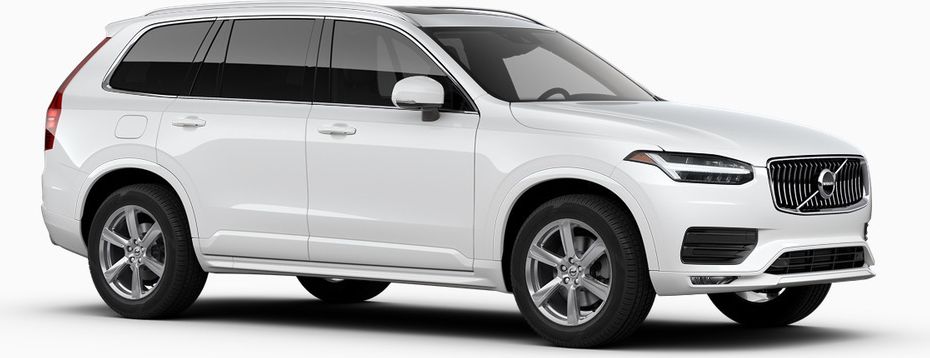
A two-post lift and a four-post lift both put a car in the air, but they hold it in opposite ways. A two-post lift grabs the frame and leaves the wheels hanging. A four-post lift lets you drive onto two runways and raises the car on its own tires. That one difference decides which jobs each lift handles well, how much floor it takes and how much setup every lift needs.
If you mostly want to park a second car above your daily driver or do quick oil changes, a 4 post car lift is usually the easier fit. If you spend weekends on brakes, suspension and wheels, a two-post lift tends to earn its place. The rest of this comparison explains why, using real numbers from current spec sheets.
2-post vs 4-post at a glance
The figures below come from one major maker's published specs for a 10,000-pound clearfloor two-post lift and a 9,000-pound four-post lift. Use them as a guide and check the numbers for the exact model you buy.
| Two-post lift | Four-post lift | |
|---|---|---|
| How it holds the car | Arms and pads under the frame lifting points | Car drives onto two runways and sits on its tires |
| Wheels | Hang free | Stay on the runways unless you add a rolling jack |
| Example capacity | 10,000 lb | 9,000 lb |
| Overall height | 148 in | 88 in |
| Footprint | 137.5 in wide, with the car setting the length | 110.25 in wide and 200.5 in long |
| Max lifting height | 76.5 in at the pads | 75 in |
| Floor | Bolted to concrete that meets the maker's spec | Many models are freestanding, and some take a caster kit |
| Best for | Brakes, suspension, tires, exhaust and transmission work | Storage, parking, oil changes, exhaust work and alignment on alignment models |
How each lift holds the car
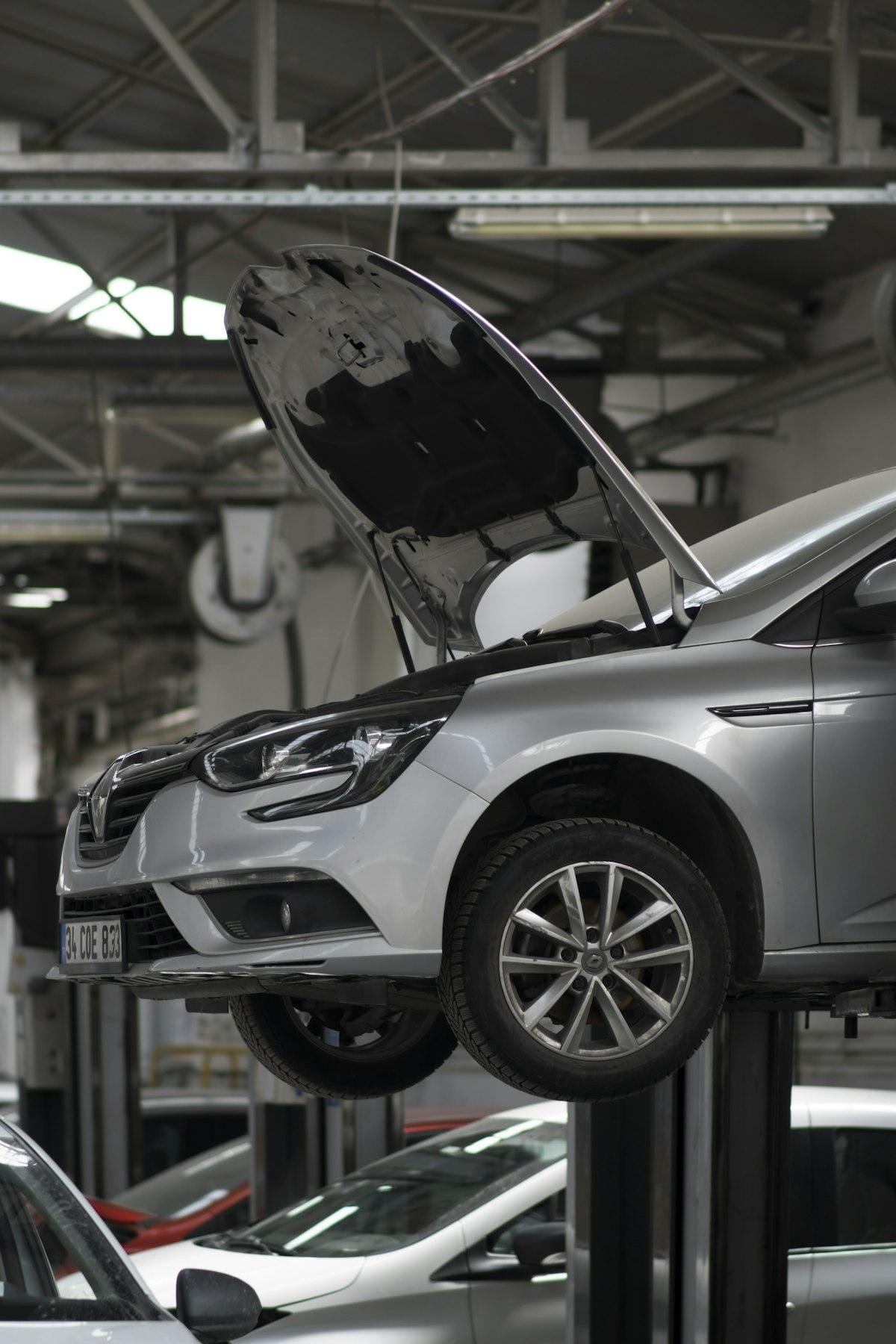
On a two-post lift, pads under the frame carry the car and the wheels hang free. Photo by Mehmet Talha Onuk on Unsplash
A two-post lift has four arms that swing under the car. You set a pad on each of the vehicle maker's lifting points, raise the car a few inches, check that it's stable, then take it to working height. It's quick once you know the routine, but you have to spot every car correctly, and a pickup or van with an odd weight balance needs more care.
A four-post lift is closer to parking. You drive onto the runways, set the parking brake, chock the tires and raise it. There are no lifting points to find, and the car's weight stays on its own suspension. That makes a four-post more forgiving for anyone who doesn't lift cars every day.
Wheel, brake and suspension work
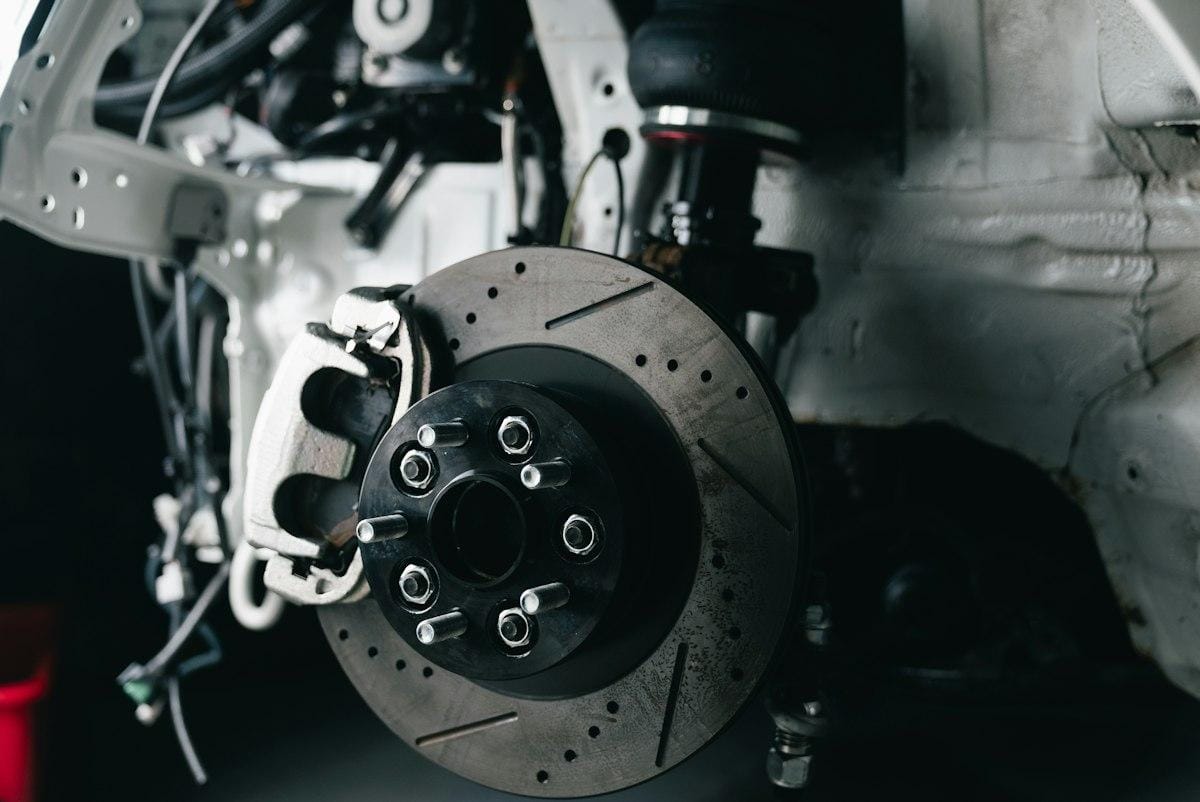
Brake and suspension jobs need the wheels off, which a two-post lift allows with no extra equipment. Photo by Erik Mclean on Unsplash
A two-post lift is the better tool for this work. With the wheels hanging free, you can pull all four, get at the brakes and work on the suspension without any extra equipment.
On a four-post lift the tires sit on the runways. To free them you need a rolling bridge jack, sometimes called an auxiliary lift, which rides along the runways and raises the car at its lifting points. One jack lifts one end of the car, so freeing all four wheels at once takes two. Some four-posts come with one included, and many offer jacks as add-ons. It works well, but it's an extra purchase and an extra step every time you want a wheel off.
Storage and parking

A parking lift stores one car above another in a single bay. Photo by Martin Katler on Unsplash
A four-post lift handles storage better because the car sits on its tires. It can stay up for weeks or months, and a second car can park underneath. That's why four-post lifts are often called car stackers or parking lifts.
It's a common reason to buy one. A weekend car, perhaps one of the best sports cars under $100k, goes up for the winter and the daily driver parks below it. Put drip trays on the runways so oil or coolant from the top car doesn't land on the one underneath.
Check the ceiling before you count on stacking. The four-post above lifts to 75 inches. Add the height of the car on top and some clearance, and that's the ceiling you need. A 55-inch-tall coupe on that lift needs about 130 inches, nearly 11 feet, before clearance. Then measure the space under the runways against the roof of the car that parks below.
Space and ceiling height
The two lifts take up space in different ways. A clearfloor two-post is tall. The example model stands 148 inches, a little over 12 feet, because of the beam across the top. Its footprint is mostly width, and the car on it sets the length.
A four-post is low but long. The example stands 88 inches tall, yet it runs 200.5 inches from end to end, close to 17 feet, plus room to drive on. It also has a rated wheelbase limit, 115 inches on this model. Many crew-cab pickups are longer than that between the axles. A Ford F-150 crew cab with the short 5.5-foot bed measures about 145 inches, so check your truck's wheelbase before you buy.
Floor, power and installation
A two-post lift carries the whole car on two columns, and each column is bolted to the slab. The same maker asks for at least 4¼ inches of 3,000 PSI concrete with rebar under its 10,000-pound-class two-post lifts. Test drill your slab to confirm its thickness rather than guessing, and don't drill at all until you've ruled out a post-tension slab.
Four-post lifts spread the load over four columns. The same maker lists the same 4¼-inch, 3,000 PSI minimum for its 9,000-pound four-posts. Many home-garage four-posts are freestanding, and an optional caster kit lets some models roll around on a suitable flat floor. That's handy if you rent or might rearrange the garage later.
Both example lifts use a 208 to 230V single-phase power unit, so plan a dedicated circuit for either one and check the breaker size on the nameplate.
Which one is safer?
Both are safe when they're installed to spec and used correctly, and both should be lowered onto their mechanical locks before anyone works underneath. The Automotive Lift Institute says vehicles fall from lifts mostly because the operator misjudged the center of gravity, didn't spot the vehicle properly or didn't chock the wheels.
A four-post makes spotting simpler, because there are no lifting points to find, though the car still needs centering on the runways and chocking. A two-post depends on setting all four pads on the right lifting points every time. Whichever you choose, check that the exact model is ALI certified, since certification applies model by model.
What each one costs to own
The lift price is only part of the bill. A four-post needs a rolling jack before it can do wheel work, drip trays if you'll stack cars and a caster kit if you want to move it. A two-post may need adapters for trucks, and new footings if the slab under the columns is too thin.
Both example lifts ship by freight truck, and their maker lists a forklift for unloading. The four-post alone weighs about 1,600 pounds crated. Add a dedicated circuit, installation help and, in some garages, a high-lift door conversion before you compare lift prices.
Which one should you buy?
You mostly do brakes, suspension, tire rotations or exhaust work. Pick a two-post lift.
You want to store a second car or park two cars in one bay. Pick a four-post lift.
You do oil changes and inspections and want drive-on simplicity. Pick a four-post lift, and add a rolling jack if you'll want the wheels off.
You do alignments. Look at a four-post alignment model with turnplates and slip plates.
Your ceiling is low but the bay is long. A four-post's low columns may fit where a clearfloor two-post won't, as long as the bay is long enough.
Your ceiling is high but the bay is short. A two-post needs less length, though it's wider and taller, so it may suit better as long as the slab meets the spec.
Whichever way you lean, measure the ceiling, the length and width of the bay and the slab thickness, then compare those numbers with the spec sheet of the model you're considering.
Quick answers
Is a 2-post or 4-post lift better for a home garage?
It depends on the work. A two-post suits brakes, suspension and wheel jobs. A four-post suits storage, parking and drive-on oil changes. If you want both, a four-post with a rolling jack covers most jobs, at the cost of an extra step for wheel work.
Can you take the wheels off on a 4-post lift?
Yes, with a rolling bridge jack, also called an auxiliary lift or sliding bridge jack. It rides on the runways and raises the car at its lifting points so the wheels come off the runways. You need two to free all four wheels at once.
Can you store a car on a 2-post lift?
You can leave a car up on the locks, but a two-post is designed for service work. For keeping a car up for weeks with another parked underneath, a four-post is the usual choice because the car rests on its tires.
How much ceiling height does each lift need?
The example clearfloor two-post stands 148 inches tall, plus at least an inch of clearance. The example four-post is only 88 inches tall, but stacking a 55-inch-tall coupe on it takes about 130 inches before clearance. Check the spec sheet for your lift and your vehicles.