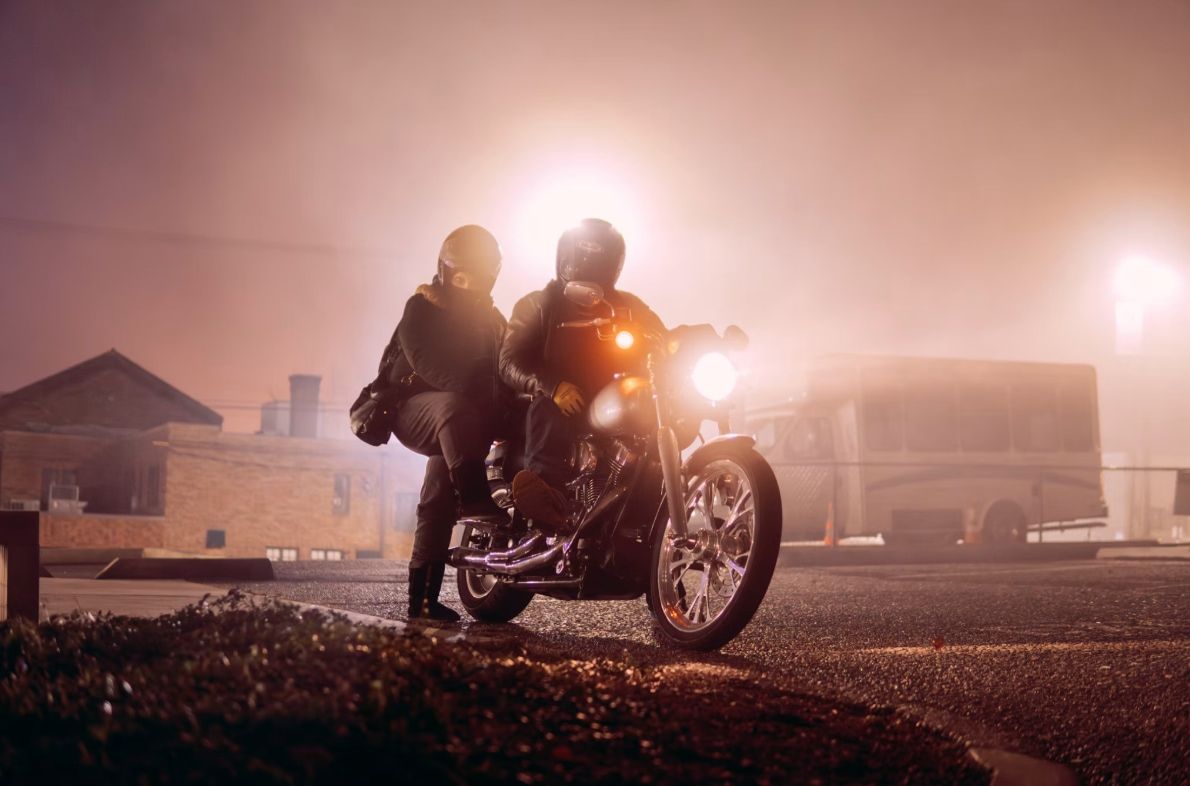
Motorcycle riders share the road with cars, trucks, and buses, but they don’t face the same level or type of risk. A rider has less physical protection, a smaller visual profile, and far less room for error when traffic conditions change. Road defects that barely register inside a car can also create an immediate problem on two wheels. Understanding these differences helps riders anticipate trouble and reminds drivers why careful observation matters.
Less protection changes the outcome
Cars surround occupants with a rigid passenger compartment, seat belts, airbags, and energy-absorbing body structures. Motorcycles don’t provide those layers of protection, so a collision that causes minor vehicle damage can leave a rider with serious injuries.
The motorcycle safety guidance from the National Highway Traffic Safety Administration emphasizes the value of a properly fitted, compliant helmet. Riders can also reduce injury risk with abrasion-resistant clothing, gloves, eye protection, and footwear that covers the ankles.
Protective equipment has limits, though. Drivers should allow a larger following distance and avoid crowding riders during lane changes. A motorcycle may need more space to respond to pavement damage, debris, or sudden traffic backups.
What to do after a crash
The differences between motorcycles and passenger vehicles can affect what happens after a collision. Injuries may be severe, while disputes can arise over visibility, lane position, and each road user's actions. Photos of the roadway, vehicle locations and nearby signs may help establish what occurred.
Call emergency services, seek medical care, and exchange information if you can do so safely. Avoid speculating about fault at the scene or posting crash details online. In Los Angeles, an injured rider facing medical expenses and an insurance claim may consider speaking with a motorcycle accident lawyer about evidence, legal options and potential compensation. Keep copies of medical records, repair estimates, and correspondence because those documents may become relevant later.
Motorcycles are easier to overlook
A motorcycle occupies a small part of a driver's visual field. This can make its distance and speed harder to judge, especially at intersections where drivers are scanning several directions. Roof pillars, mirrors, and nearby vehicles may briefly hide a rider from view.
However, a quick glance often isn't enough. Drivers should look twice before turning or changing lanes, check mirrors and blind spots, and use signals early. Riders can improve visibility with daytime lighting, visible lane positioning, and gear that contrasts with the surroundings.
Eye contact offers no guarantee that another road user has recognized a rider or understood their intended path. Both parties should wait for clear movement cues before proceeding.
Road conditions have a bigger effect
Potholes, loose gravel, metal utility covers, and wet leaves can reduce a motorcycle's available traction or force a sudden change in direction. Painted lane markings may become slick when wet. Crosswinds from open areas or passing large vehicles can also move a motorcycle within its lane.
The motorcycle crash research published by the Insurance Institute for Highway Safety provides useful context on rider risks and safety measures. On the road, riders should scan well ahead, reduce speed before reaching a hazard, and leave enough space to adjust gradually.
Drivers can help by avoiding abrupt lane changes near motorcycles. If a rider shifts position within a lane, they may be avoiding a surface problem that isn't obvious from inside a car.
Braking and cornering require different decisions
Motorcycles rely on careful balance during braking and turning. A rider who brakes sharply while leaned into a curve has less traction available than one traveling upright on a straight road. Panic stops become especially difficult when following traffic leaves little room.
Space is the practical answer. Riders should maintain a clear buffer, enter curves at a controlled speed, and practice emergency braking in a suitable training environment. Drivers should avoid pulling into a rider's path based on the assumption that the motorcycle can stop instantly.
Weather adds another variable. Rain can bring oil residue to the surface during the first part of a storm, while reduced visibility makes a motorcycle even harder to detect. Lower speeds and greater following distances give everyone more time to react.
Shared awareness makes the road safer
Riders benefit from treating visibility as an active task. That means staying out of blind spots, signaling early, and positioning the motorcycle where other road users are more likely to see it. Drivers need to check carefully before opening a parked car door, crossing a lane or turning through an intersection.
No single precaution removes every risk. The strongest habits work together: protective equipment, appropriate speed, sober attention, and enough space to handle the unexpected. For drivers, one deliberate second look before a turn can prevent the type of conflict that leaves a rider with no protected space and no practical escape route.