The total loss vehicle appraisal process determines a car's pre-accident market value (Actual Cash Value), compares it against the cost of repairs and salvage value and then sets a payout offer when the damage is unsafe or uneconomical to fix.
When a severe car accident leaves a vehicle damaged beyond repair, insurance companies will normally initiate a total loss car appraisal to compensate the owner for the vehicle's actual cash value (ACV) immediately before the crash, as opposed to paying for the repairs.
Understanding how this evaluation works can help drivers pursue claims smoothly and verify that their settlement offers reflect fair market reality.
Initial Damage Inspection and Repair Estimates
The process begins shortly after you file a claim when an insurance adjuster or authorized repair facility inspects the car to document the structural, mechanical and cosmetic damage.
The adjuster will use industry-standard estimating software to calculate:
The projected cost of replacement parts
Specialized labor
Paintwork
In most U.S. states, insurers will classify a car as a total loss when the repair costs reach a specific percentage of the car's pre-accident value or when the expected repair costs plus the car's salvage value exceeds its actual cash value.
Automated Valuation and Market Comparisons
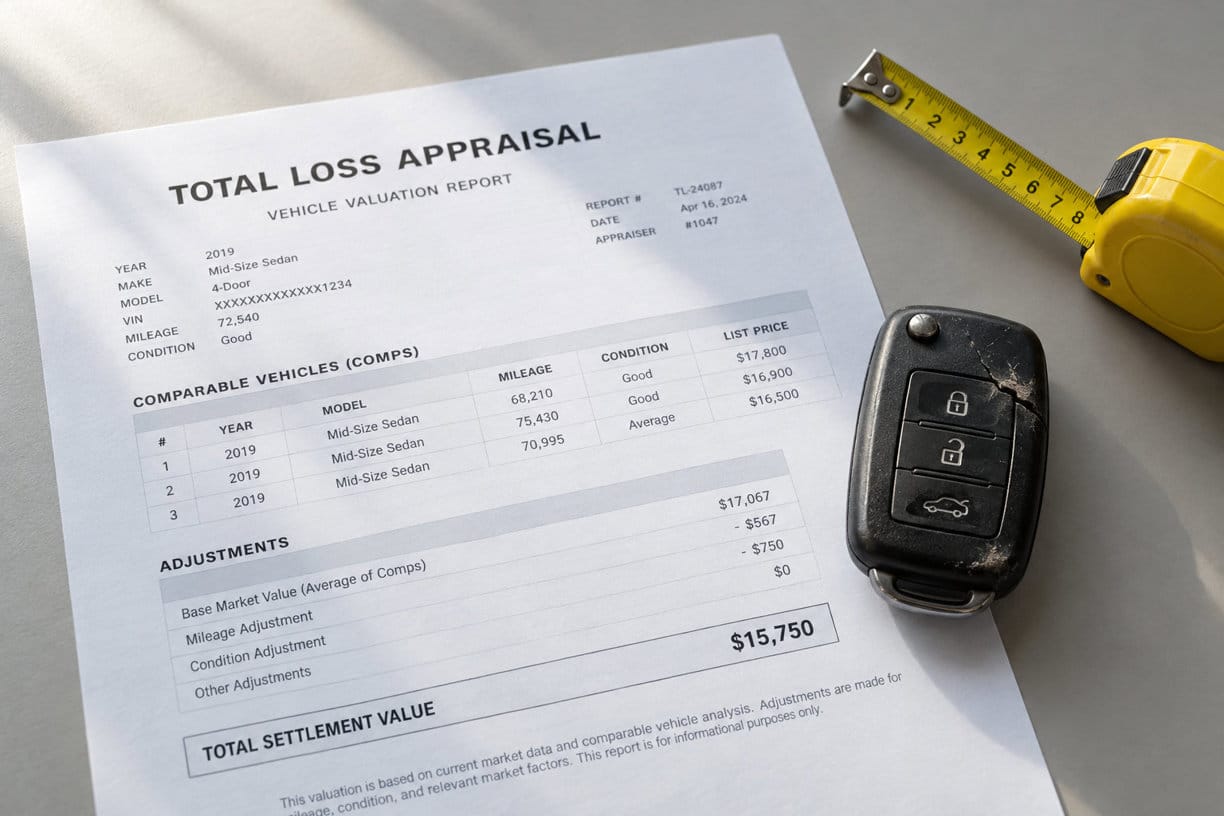
Once the vehicle is deemed a total loss, the insurer will calculate its pre-crash market worth. Insurance carriers hardly ever visit local dealerships in person and instead rely on third-party valuation sites.
These automated reports compile recent sales and dealer listings for comparable vehicles within your geographic region, matching things like:
Year
Make
Model
Trim
The software will then apply upward or downward adjustments based on specific variables, some of which include:
Odometer reading
Pre-accident condition
Factory options and packages
Reviewing the Offer and Independent Appraisals
Since automated software can overlook rare trim levels, recent mechanical upgrades or local market spikes, initial insurance offers can sometimes undervalue the vehicle. As such, you should always request the full valuation report so you can verify that the mileage, trim specifications and comparable listings are accurate.
If the insurer's figures seem flawed, you don't have to accept the first offer they give you. You can either submit counter-evidence or hire an independent specialist to conduct a total loss car appraisal.
An independent appraier will review the insurer's valuation report, audit local market data and provide you with documented proof to support negotiations or to invoke the policy's appraisal clause, in order to secure a fair settlement.