Winter driving is brutal on paint. Between corrosive road salt and freezing moisture, your car's factory finish takes a beating every time temperatures drop. And the numbers back that up: the EPA estimates that road salt causes roughly $5 billion in annual damage to vehicles and infrastructure across the U.S., with some studies putting total corrosion costs as high as $19 billion.
Municipal road crews aren't going easy, either. In Michigan alone, MDOT used over 111,000 tons of salt in a single season. That kind of aggressive salting means the threat to your clear coat is higher than ever heading into 2026.
So what can you actually do about it? Basic car washes won't cut it. You need a systematic approach to exterior protection, starting with thorough decontamination and ending with a durable barrier between your car's paint and the elements.
How Winter Elements Attack Your Clear Coat
Salt, Moisture, and Hidden Damage
Winter doesn't just make your car look dirty; it inflicts real chemical damage on the finish. Moisture degrades the clear coat over time, breaking down the protective layer and exposing bare metal. Surface oxidation is just the starting point.
What's worse is the damage you can't see. Brine seeps through drainage paths and window channels, quietly eating away at your vehicle's framework from the inside. The AAA Foundation estimates that corrosion costs around $70 per ton of salt encountered by fleet vehicles. For everyday drivers, those costs add up fast.
Why Early Intervention Matters
Waiting until spring to deal with winter paint damage is a costly mistake. Catching oxidation early in spring prevents minor clear coat problems from turning into full-blown rust and expensive body repairs. Repair technicians consistently say the same thing: Act fast, or a small problem becomes a structural one.
This meticulous attention extends beyond preventative measures to addressing existing imperfections, as even minor surface damage can compromise a vehicle's protective layers and lead to further degradation if not properly managed. Therefore, understanding options for an auto scratch repair is crucial for maintaining the vehicle's overall aesthetic and structural integrity, with different types of scratches requiring specific approaches to avoid exacerbating the damage.
Think of it like any other vehicle maintenance task. Just as you'd carefully measure a truck bed for a tonneau cover to ensure a good fit, you should bring the same precision to paint preservation. Removing corrosive compounds before they breach the base coat is the single most important step you can take.
Decontamination: Getting the Surface Ready
Before you apply any protective layer, the paint must be thoroughly cleaned. And no, a trip through an automatic car wash doesn't count. Those spinning brushes actually push grit deeper into the surface. Instead, foaming salt removers and careful hand-washing techniques are the way to go.
Here's a step-by-step breakdown of proper decontamination:
- Pre-rinse and undercarriage wash: Hit the wheel wells and undercarriage first to flush out the heaviest salt deposits before you touch the paint.
- Chemical decontamination: Spray an iron and fallout remover to dissolve embedded brake dust without harsh scrubbing.
- Two-bucket hand wash: Use a grit guard and two separate buckets (one for soap, one for rinsing) to avoid dragging dirty water back across the finish.
- Clay bar treatment: Run a detailing clay bar over the wet surface to pull out microscopic contaminants that the chemical wash missed.
- IPA wipe-down: Finish with an isopropyl alcohol solution to strip away old waxes and leave a perfectly clean surface ready for bonding.
Skip any of these steps, and you risk trapping salt and grit beneath your sealant. That defeats the entire purpose. Proper prep dictates how long any coating will actually last.
Why Ceramic Coatings Are Worth the Investment
Traditional carnauba wax might look great for a few weeks, but it breaks down quickly in freezing temperatures. If you're serious about protecting your paint through winter, it's time to think beyond wax.
That's where ceramic coatings come in. The ceramic coating market was valued at $12.15 billion in 2024 and may reach $25.60 billion by 2034. That kind of growth tells you something: more drivers are catching on to the long-term value. The resale numbers are compelling, too. Ceramic coating may boost trade-in value simply by preserving the original factory paint.
So what are the actual benefits of ceramic coating? For starters, a professionally applied ceramic layer creates a 9H+ hardness bond that won't wash off in heavy rain or aggressive winter car washes. It repels road salt, resists chemical stains, and dramatically reduces water spotting. Treated vehicles can see up to a 50% reduction in paint degradation compared to unprotected surfaces.
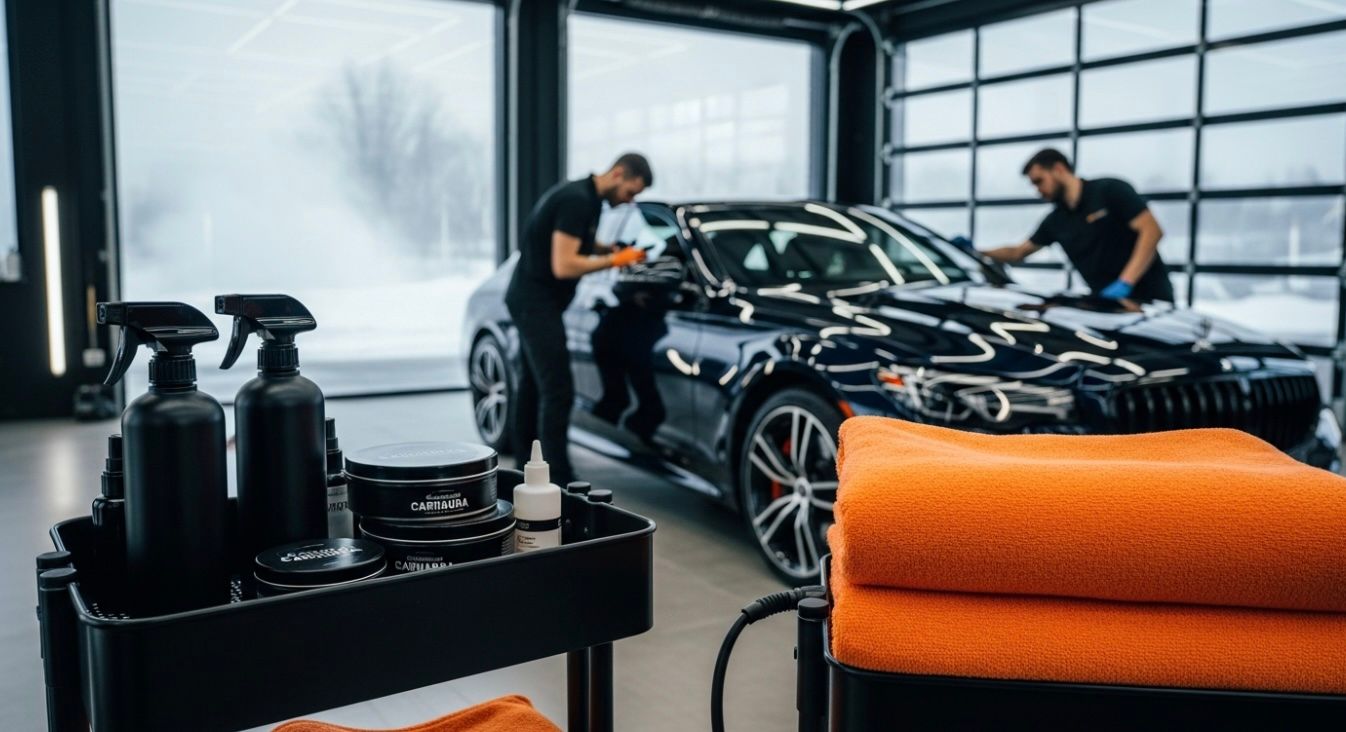
While DIY spray sealants offer temporary relief, professional-grade application is a different league entirely. Shops like MNV Auto Detailing perform multi-stage paint correction before the coating ever touches the surface, removing swirl marks and defects so the polymer bonds to a flawless finish. This kind of work happens in a climate-controlled facility, which matters more than most people realize.
The financial math favors professional application, too. Over five years, the compounding cost of monthly wax jobs typically exceeds the one-time investment in a quality ceramic coating. Plus, the extreme hydrophobic properties mean you'll use less water and less time on routine washes. If you're shopping for a sports car under $100k, protecting that kind of investment with a proper coating just makes sense.
| Feature | Traditional Carnauba Wax | Professional Ceramic Coating |
|---|---|---|
| Lifespan | Weeks to months | 2-5 years |
| Chemical Resistance | Low | High (9H+ hardness) |
| 5-Year Maintenance Cost | High | Low |
| Water Sheeting | Moderate | Extreme; 94% fewer water spots |
Protecting Your Car for the Long Haul
Defending your car against harsh winter conditions isn't something you can afford to put off. Road salt and moisture are persistent threats to your vehicle's appearance and structural integrity. By the time rust appears, you're already looking at expensive bodywork and a hit to resale value.
Whether you go with a budget-friendly DIY sealant or invest in a professional multi-layer ceramic coating, the most critical step is always thorough decontamination. Get the surface right, and whatever protection you apply will actually do its job.
Take the time to build a disciplined maintenance routine. Your car's factory finish (and your wallet) will thank you for it.