Roads are safer, but crashes are more expensive. That’s the new reality in 2026, reshaping repair bills and insurance premiums.
NHTSA reported U.S. traffic deaths fell 6.7% in 2025, down to an estimated 36,640—marking the second-lowest fatality rate ever. That’s a win for engineering. Yet the advanced driver assistance systems (ADAS) saving lives are also driving up repair costs and complicating insurance in ways most drivers don’t expect.
Here's what you need to know about the financial side of modern car crashes, from the insurance risk paradox to out-of-pocket tech repairs.
Fewer Collisions, Higher Repair Bills
Advanced safety technologies, such as lane-keep assistance, blind-spot monitoring, and autonomous emergency braking, are fundamentally shifting the landscape of national collision statistics. Highway Loss Data Institute data, vehicles with basic AEB saw a 13% reduction in property damage claim rates.
The protection goes even further with full safety packages. According to an IIHS study, Mazda models with comprehensive safety bundles showed a 39% decrease in property damage liability claim rates. So fewer crashes, right? That's great news.
But here's the catch. While claim frequency is dropping, the cost per individual is increasing. But here's the catch. While claim frequency is dropping, the cost per individual claim is climbing fast.
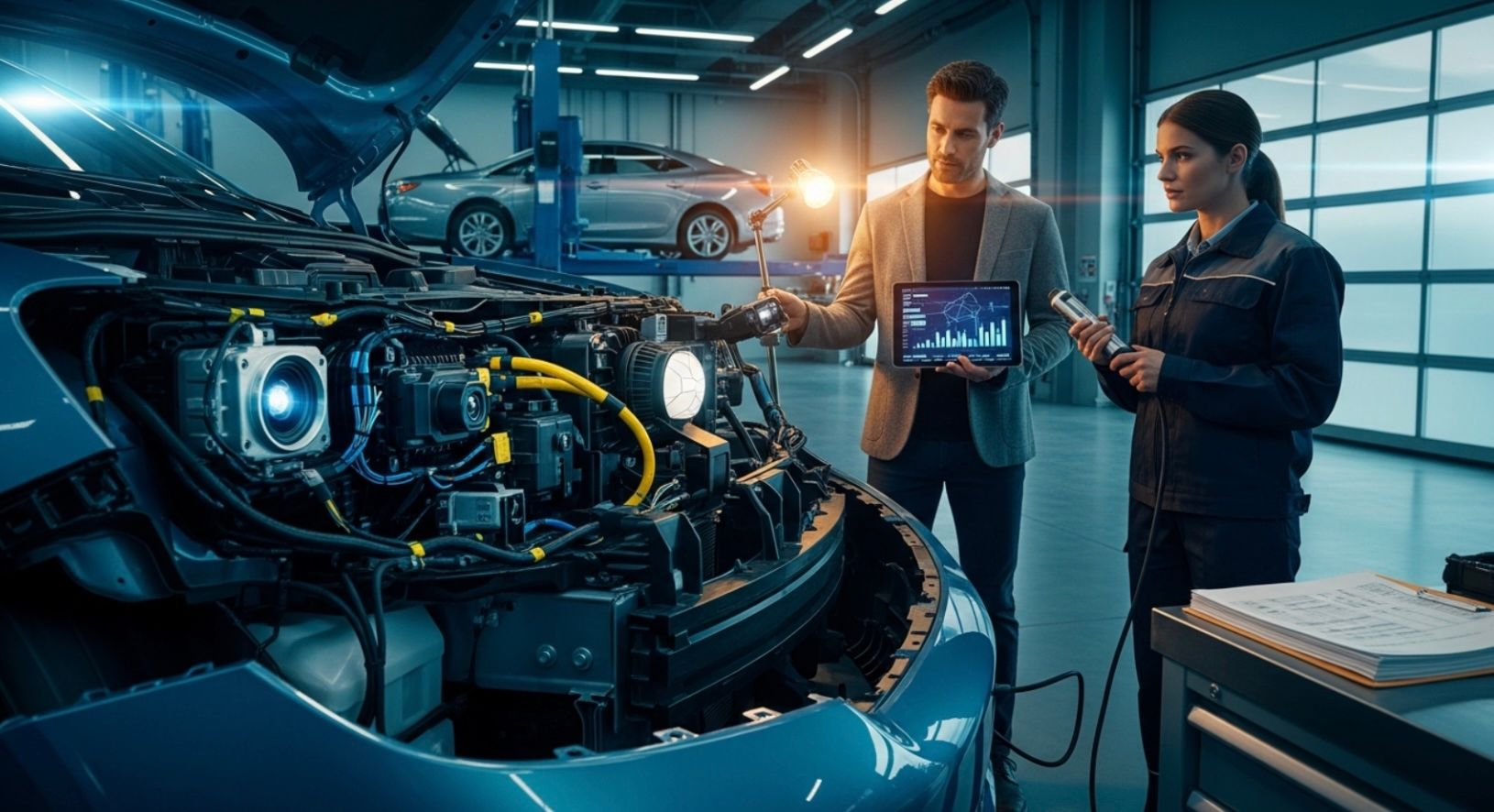
A minor fender bender used to mean swapping out a piece of plastic at a local body shop. Now, that same low-speed impact can involve replacing delicate radar sensors, LiDAR components, and multiple cameras tucked behind the bumper cover. After the physical repairs, these systems require costly software recalibration, further increasing claim costs. Developments and efforts to push for stricter performance standards across the industry. And as manufacturers embed more sophisticated tech into body panels and chassis, labor rates for specialized technicians keep rising.
| Collision Type | Traditional Vehicle | ADAS-Equipped Vehicle | Repair Complexity |
|---|---|---|---|
| Low-speed rear-end | Replace plastic bumper cover | Replace bumper, rear-view camera, and backup sensors | High; requires OEM parts and recalibration |
| Side-mirror swipe | Replace mirror housing and glass | Replace housing, glass, blind-spot monitor, and 360-degree camera | High; requires sensor alignment |
| Windshield crack | Simple glass replacement | Glass replacement plus forward-facing camera recalibration | Moderate; specialized technician needed |
The 2026 Insurance Landscape
This shift in vehicle technology is hitting insurance premiums directly. Insurers build their rates on sophisticated risk models, and the current environment is creating a statistical headache for actuaries.
Verisk's annual claims report detailed what it calls the "Insurance Risk Paradox"—even as personal auto claims volume dropped from 34.4 million in 2022 to 31.6 million in 2025, premiums have not decreased as one might expect. Why does a reduction in claims not translate to lower premiums? That's the paradox insurers are grappling with.
Not exactly. The underlying risks have become more complex and concentrated. Repairing a single high-tech vehicle can now eclipse the combined repair costs of multiple older models. This drives premiums for all drivers upward to cover those concentrated losses.
The gig economy and commercial ride-sharing have muddied the waters further. They blur liability lines in ways traditional underwriting wasn't built to handle.
Insurers also have to account for vehicle downtime during prolonged tech repairs, which inflates rental car reimbursements. As these secondary costs stack up, the industry is being forced to rethink its entire approach to coverage limits.
Fraud Is Making It Worse
Rising repair costs aren't the only thing pressuring premiums. Fraud is surging, too. British insurer Admiral detected £86.8 million in fraudulent claims in 2025, a 71% jump from the year before. Much of that spike is driven by AI-fabricated vehicle damage images and falsified documents.
Because insurers are allocating resources to combat these scams, legitimate claimants face more scrutiny than ever. You might wait longer for approvals, get detailed questions, and provide extra evidence—just to satisfy the adjuster. Sound familiar?
This defensive posture means you need to be organized and proactive when filing any claim for high-tech vehicle damage. Document every detail of the accident and resulting damage; it's no longer optional if you want fair compensation.
Protecting Your Payout After a Crash
Real friction tends to surface between vehicle owners and their insurance companies after an ADAS-equipped car is damaged. The conflict is pretty straightforward: insurers want to minimize payouts, and you need comprehensive repairs to restore both structural integrity and tech functionality.
Adjusters frequently push for cheaper aftermarket parts or refuse to cover the specialized labor required to properly recalibrate sensor networks. This kind of cost-cutting can leave your vehicle unsafe on the road.
When an insurer disputes sensor recalibration, denies OEM part coverage, or tries to lowball a settlement for complex tech repairs, that is when to call a car accident attorney who can enforce the policy terms and protect your finances.
Here's a practical framework for handling tech-heavy vehicle claims:
Demand pre- and post-repair system scans. Make sure your body shop runs diagnostic scans before and after repairs to confirm all ADAS sensors are communicating correctly.
Insist on OEM parts for safety tech. Aftermarket components can interfere with radar and camera functionality. Push your insurer to cover Original Equipment Manufacturer parts for all safety systems.
Document calibration requirements. Get documentation from the manufacturer outlining specific recalibration needs for your vehicle's make and model. This helps justify costs to the adjuster.
Don't accept early settlement offers. Wait until a specialized mechanic assesses the internal electronic and software damage, which is often invisible to the naked eye.
Balancing Safety and Financial Security
The $340 billion economic cost of motor vehicle crashes is slowly being chipped away by technology that saves lives every day. But the immediate financial burden of individual collisions is shifting toward repair shops and consumers.
Understanding what modern vehicle tech actually costs to repair lets you evaluate your coverage limits before a serious accident. Specialized sensors, cameras, and software represent a big investment. They need adequate protection through comprehensive policies.
Take charge of your claims process: assess your coverage now, gather detailed documentation, and seek professional help when necessary. Don’t wait—ensure you’re equipped to navigate tech-heavy repairs and never settle for less than the repairs your vehicle needs for safety. Make your next claim work for you, not against you.