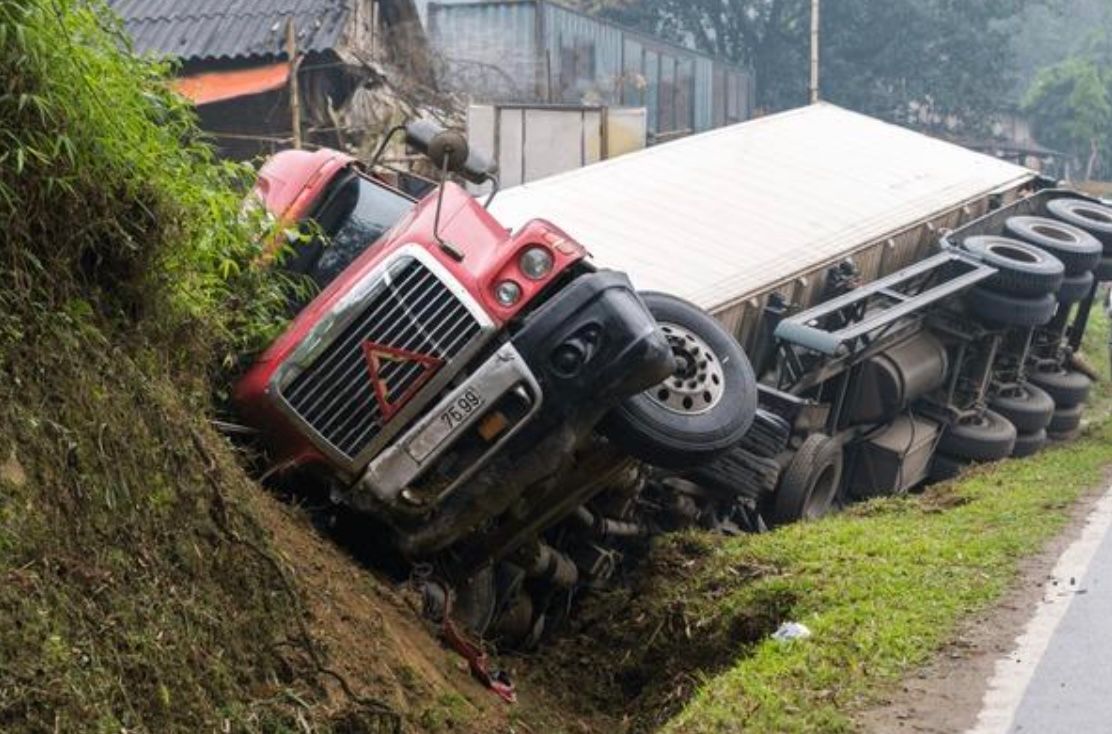
Truck accidents are not like regular car crashes. The damage is bigger, the injuries are worse, and the legal process is far more complicated.
Albuquerque, which is located in New Mexico, is set along the Rio Grande and backed by the Sandia Mountains. Due to the city’s location along major highways like Interstate 40 and Interstate 25, truck accidents are a significant concern. Large commercial trucks can weigh up to 80,000 pounds when fully loaded. When those vehicles hit a passenger car, the result is catastrophic.
If you were hurt in a truck crash in Albuquerque, you need strong evidence to build a strong claim. Albuquerque truck accident lawyers know exactly what to gather, how to preserve it, and how to use it to build a case. They collect black box data, driver logs, police reports, etc.
This article talks about the evidence needed to build a truck accident case.
Black Box Data
Every commercial truck in the U.S. is required by federal law (49 CFR Part 395) to carry an Electronic Logging Device (ELD). It records speed, braking, engine activity, GPS location, and hours of service.
This data can confirm
- Whether the driver was speeding
- Whether they exceeded the legal 11-hour driving limit within a 14-hour on-duty window
- Whether their actions just before impact were abnormal.
The catch is that ELD data can be overwritten within 30 days. A spoliation letter must go out to the trucking company immediately to preserve it. That window closes fast.
Driver Logs
Paper logs still exist alongside ELD data on many routes. Comparing the two can expose falsified records.
Employment records reveal
- Whether the driver held a valid Commercial Driver's License (CDL) under 49 CFR Part 383
- Whether they had prior violations
- Whether the company ran proper background checks before putting them behind the wheel.
A company that skips those checks can face a negligent hiring claim on top of everything else.
Truck Maintenance Records
Federal regulations under 49 CFR Part 396 require trucking companies to inspect, maintain, and repair their vehicles on a consistent schedule.
Those maintenance records become some of the most important documents in the case if faulty brakes or defective steering played a role in the crash.
Skipped inspections or ignored repair orders are not just paperwork violations; they are evidence of negligence. Depending on the failure, liability may extend to the truck manufacturer or a third-party maintenance contractor as well.
Police Report
The police report captures what the responding officer observed. These reports are available through the Department of Transportation or the Albuquerque Police Department.
Crash scene photos tell a story that words sometimes can't. Skid marks, vehicle positions, road damage, and traffic signals all help reconstruct what happened. Surveillance footage from nearby businesses or traffic cameras can also be useful.
Witness statements taken at the scene can also lock in key details that support your account.
Medical Records
Your medical records are what connect your injuries to the crash. Every emergency room visit and follow-up needs to be documented consistently. Because the defense will look for gaps in treatment and use them to argue your injuries are not as serious as claimed.
Expert witnesses fill in what documents alone cannot prove. Accident reconstruction specialists work backward from physical evidence to establish speed, point of impact, and fault.
Medical experts explain your long-term health and recovery. Economists estimate how much money you may lose in the future and the cost of ongoing care. In serious truck accident cases, this kind of expert help can make a big difference in the outcome.
Hours of Service Violations
Fatigue is one of the most common factors in commercial truck crashes. The FMCSA estimates it contributes to roughly 13% of all commercial motor vehicle accidents. When evidence shows a driver was over their legal hours, or that a company pressured them to keep driving anyway, that is considered negligence.
Key Takeaways
- Truck accidents are more complex than regular vehicle crashes.
- You need proper evidence to prove negligence and build a strong case.
- Federal law (49 CFR Part 395) insists every commercial truck should install an Electronic Logging Device (ELD).
- Truck maintenance records are some of the important documents in a truck accident case.
- Medical records are the ones that connect your injuries to the crash.