Out of Warranty, Still on the Road
Americans are keeping their vehicles longer. In its 2025 analysis, S&P Global Mobility put the average age of cars and light trucks on U.S. roads at 12.8 years, across a fleet of 289 million vehicles. Passenger cars alone averaged 14.5 years.
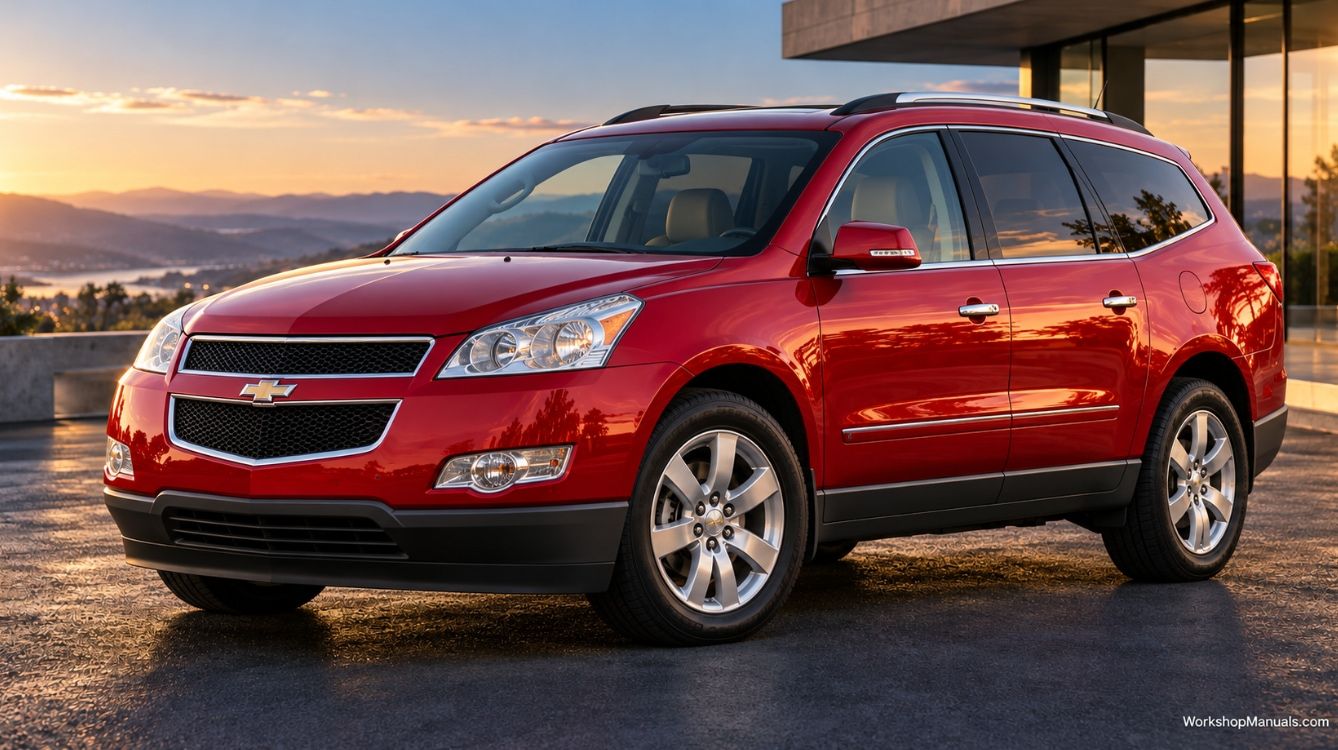
That aging fleet includes plenty of three-row family crossovers. The Chevrolet Traverse has been a familiar sight since its 2008 launch, and the CarFigures Traverse sales report shows how its U.S. sales have developed over the years.
The 2009–2013 models are now well beyond their original factory warranties. Many have also passed 100,000 miles. Keeping one useful at 150,000 miles and beyond starts with understanding its condition, spotting problems early and making informed repair decisions.
Why the first-generation Traverse still matters
The Traverse shares GM’s Lambda platform with the GMC Acadia, Buick Enclave and Saturn Outlook. Related V6 engines and six-speed automatics mean some repair concerns overlap, but parts and procedures still need to match the exact vehicle.
With seating for seven or eight, these crossovers offer a lot of family space. At this age, though, service history and an independent inspection matter more than a low asking price or a shiny exterior.
The repairs that matter at high mileage
Timing chains on the 3.6-liter V6
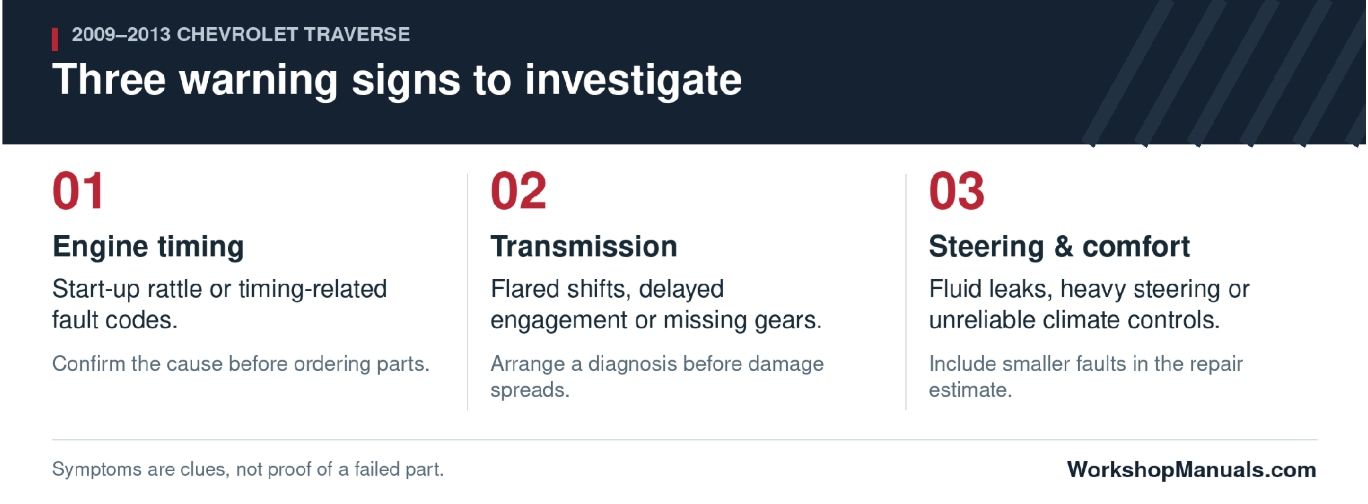
Timing-chain wear is a documented concern on early Traverses. GM’s service information addresses worn chains and timing-related trouble codes on the 3.6-liter V6. A cold-start rattle or codes such as P0008 and P0017 deserve investigation, but neither proves that the chain is the only possible cause.
Have the fault diagnosed before approving a major repair. GM’s diagnostic guidance also identifies other possible causes of timing-correlation codes. Prompt attention may limit further damage; waiting until an engine fails can turn a repair into an engine replacement. Keep oil changes on schedule, check the oil level as directed and retain the service records.
The 6T75 transmission wave plate
GM issued a Special Coverage Adjustment for a clutch wave plate that could fracture and cause loss of third, fifth and reverse gears. The bulletin includes certain 2009 Traverses. It is not a blanket statement that every 2009–2013 vehicle has the same defect or qualifies for coverage.
The program covered eligible vehicles for 10 years or 120,000 miles from their original in-service date, whichever came first. Owners of these older vehicles should not assume repairs are still covered. The bulletin also explains why debris removal matters: replacing the failed plate without the specified cleaning can lead to repeat damage.
Regardless of model year, flared shifts, delayed engagement or high engine revs with weak acceleration call for a prompt transmission diagnosis and an itemized estimate.
Steering, climate and electrical systems
Include power-steering leaks, air-conditioning operation and electrical functions in any inspection. Smaller faults can add up, and an intermittent problem is easier to describe when you have noted exactly when it happens. Ask the shop to identify the cause before replacing parts.
When the warranty is gone, the owner’s manual is not enough
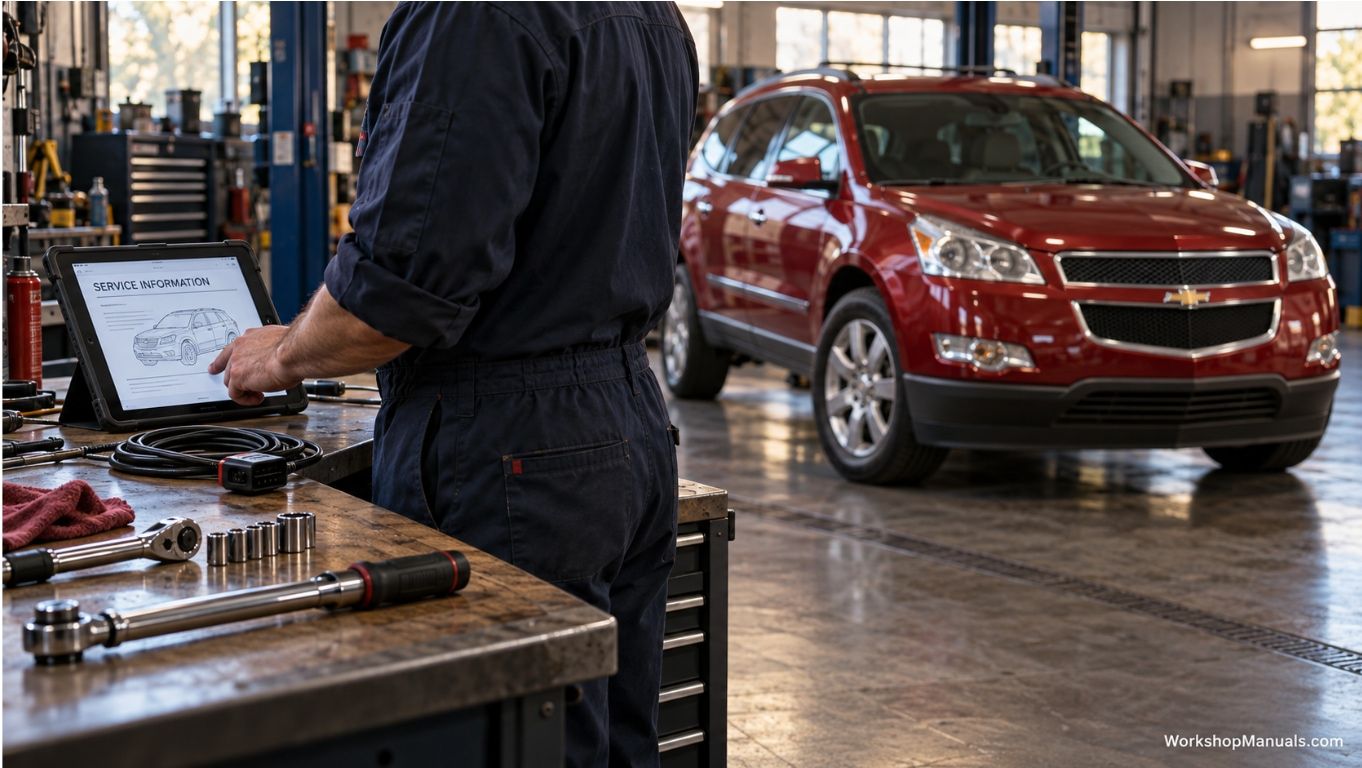
The owner’s manual in the glovebox explains normal operation, maintenance intervals and warning lights. It does not replace the detailed procedures needed to set engine timing, inspect transmission components or trace an electrical fault.
Model-specific service information supplies that detail. The Chevrolet Traverse workshop and service manual lists repair procedures, torque specifications, wiring diagrams and diagnostic information for the 3.6-liter V6 and 6T75 automatic. Match the information to the vehicle before ordering: the listing’s model notes exclude the 2013 facelift, so owners of that version should confirm coverage with the supplier.
The value is practical, even if a professional does the work:
- For a timing-chain repair, the correct procedure helps establish the job’s scope, required tools and checks before reassembly.
- For transmission work, service information helps you ask whether inspection and debris removal are included in the estimate.
- For electrical faults, wiring diagrams and diagnostic routines help trace the circuit instead of replacing components by guesswork.
You do not need to turn your own wrenches to benefit. Understanding the proposed job makes it easier to compare quotes, ask useful questions and keep a clear record of what was repaired. The information supports a diagnosis; it does not replace the skills or equipment the repair requires.
Shopping for a used Traverse? Check these first
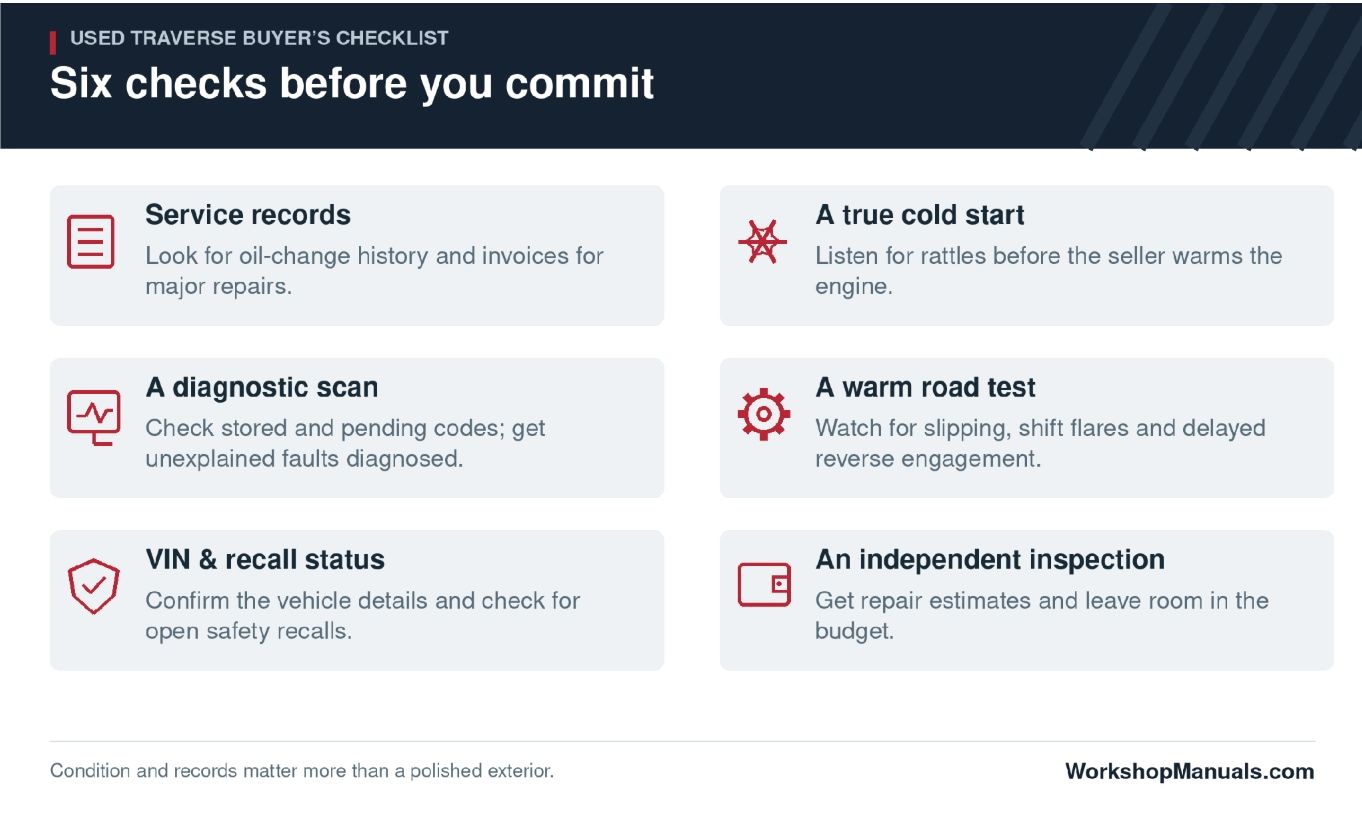
A first-generation Traverse can still be a sensible buy when its condition and price line up. Look for evidence of consistent maintenance and properly documented repairs, rather than assuming that a replacement part alone guarantees a healthy vehicle.
- Ask for invoices. Review oil-change history and any timing-chain or transmission work. Check the date, mileage and scope of each repair.
- See it start cold. Arrange to inspect it before the engine is warmed up. Have unexplained rattles investigated.
- Scan and road-test it. Check stored and pending codes, then assess the transmission once warm, including reverse. Slipping or delayed engagement needs diagnosis.
- Confirm its identity. Compare the VIN with the title and service records, verify the engine and drivetrain, and check NHTSA for open safety recalls.
- Price the whole vehicle. Have an independent shop inspect it and estimate needed work. Leave money for age-related repairs after the purchase.
The Traverse earned its place on family driveways by carrying people and their gear. A well-maintained example can remain useful beyond 150,000 miles, but mileage alone is no guarantee. Records, early diagnosis and the right service information are what make an older SUV a considered purchase instead of an expensive gamble.